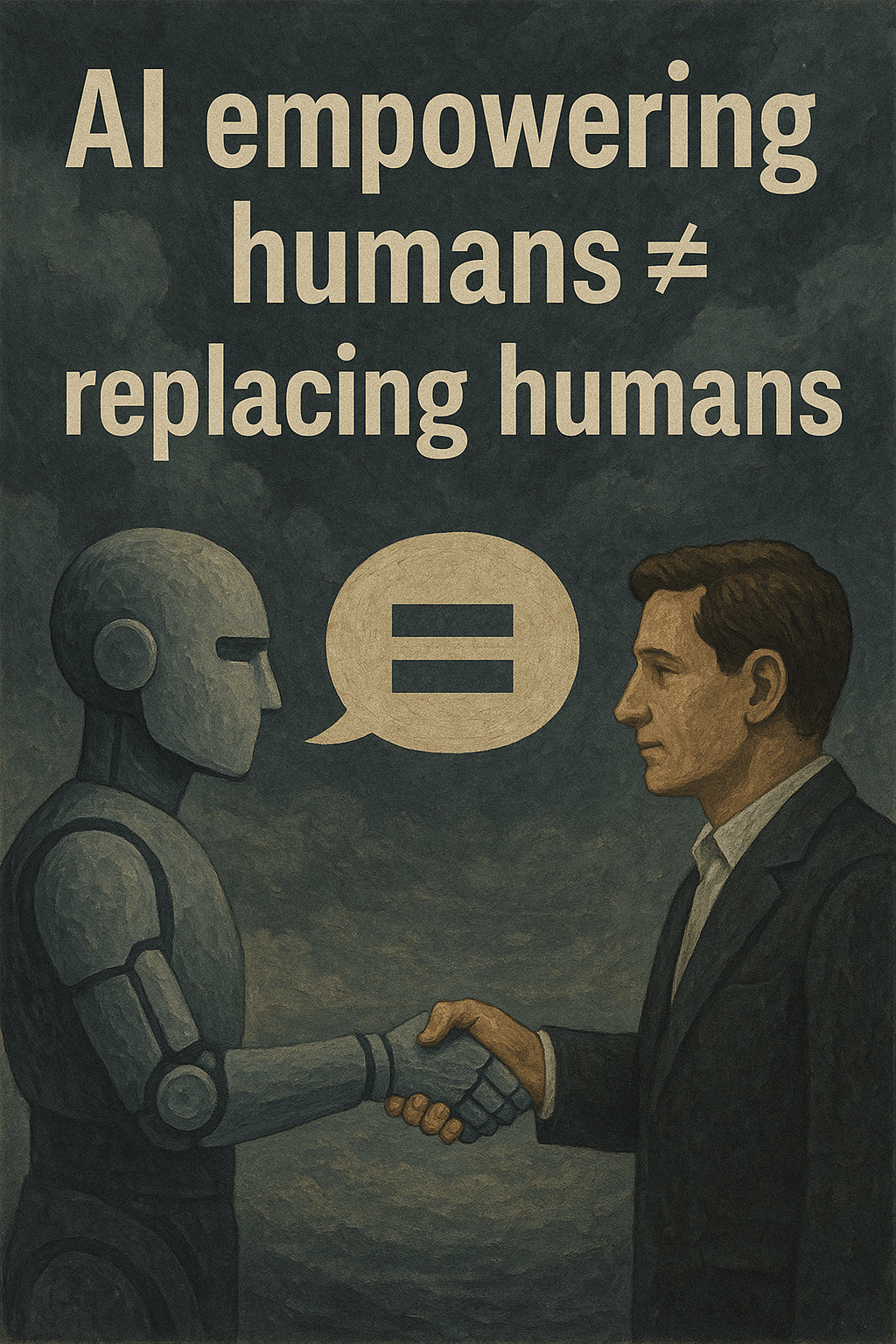
AI will not replace every professional. But professionals who know how to work with AI will absolutely start replacing those who do not. That is not fearmongering. It is the new operating reality of the market described in the latest TIME piece, that I felt deeply needed reframing through a more practical, execution-first lens.
At CodeBoxx, we see this less as a story about job loss and more as a story about leverage. The gap is opening between people who are merely aware of AI and people who are already using it to think faster, write better, analyze deeper, and ship more value. Business leaders are not treating this as a distant trend. LinkedIn’s 2025 Work Change Report says 88% of C-suite leaders view speeding up AI adoption as important over the next year, and Microsoft and LinkedIn’s Work Trend Index found that 66% of leaders would not hire someone without AI skills. Even more telling, 71% said they would choose a less experienced candidate with AI skills over a more experienced one without them.
This is why the conversation should move beyond “Will AI take my job?” The better question is: how much more effective can one person become when AI is built into their workflow? In our world, that means compressing the distance between intent and execution. A marketer with AI can go from blank page to campaign architecture in minutes. A project manager can turn scattered notes into structured follow-up instantly. A software team can move from idea to prototype at a pace that would have required materially more people only a short time ago. That is not theoretical. LinkedIn reports that by 2030, as much as 70% of the skills used in jobs are expected to change, up from 24% changed globally between 2015 and 2022.
The winners in this next phase will not necessarily be the most technical people. They will be the people who learn to collaborate with AI early, deliberately, and repeatedly. They will know how to prompt, verify, refine, orchestrate, and apply judgment. That matters because the market is not simply rewarding knowledge anymore; it is rewarding applied capability and more importantly actionable outcomes. The World Economic Forum’s Future of Jobs Report 2025, based on more than 1,000 employers representing over 14 million workers, found that AI and information processing are among the most transformative business trends shaping the next five years.
So the real risk is not that AI suddenly appears one day and makes people obsolete. The real risk is more gradual and more dangerous: someone beside you starts using AI to create more output, better decisions, faster learning, and higher-quality work every week, while you keep operating manually. Over time, that difference compounds. In an AI-native economy, leverage compounds faster than seniority.
That is why CodeBoxx’s position is simple: do not wait to be disrupted; become AI-native now. Experiment now. Build new muscle now. Redesign how you work now. Because the professionals who treat AI as a daily operating advantage, not a future curiosity, will be the ones who define the market that comes next.
 Time to Share
Leave a comment